Trailer axle parts are very important for safe towing. They support the trailer weight, help the wheels turn, and keep the trailer stable on the road. When one part becomes worn or damaged, the trailer may not move smoothly. It may also become unsafe to use.
Before replacing trailer axle parts, buyers should understand the basic parts, common problems, and key measurements. This guide explains trailer axle parts in simple language, so you can make a better buying decision before repair or replacement.
What Are Trailer Axle Parts?
A trailer axle is not just one long metal tube. It is a complete system made of several parts. These parts work together to carry the trailer load and connect the wheels to the trailer frame.
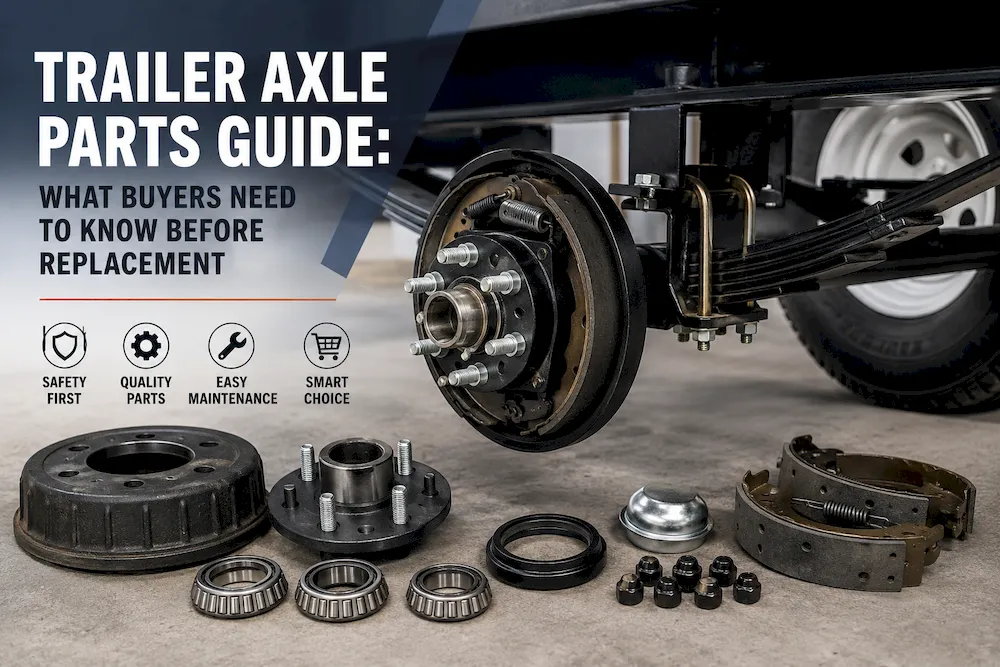
Common trailer axle parts include:
- Axle beam or axle tube
- Spindles
- Hubs
- Drums
- Bearings
- Grease seals
- Brake assemblies
- Leaf springs or torsion arms
- U-bolts and mounting hardware
- Dust caps or grease caps
When replacing axle parts, it is important to know which part has the problem. Sometimes you only need a small repair part, such as a bearing or seal. Sometimes the whole axle assembly may need replacement.
Why Trailer Axle Parts Need Replacement
Trailer axle parts work under pressure every time the trailer moves. They carry heavy loads, handle road vibration, and deal with dust, water, heat, and friction. Over time, these parts can wear out.
Common Reasons for Replacement
- The trailer has been overloaded.
- The bearings are worn or damaged.
- The hub or drum is cracked or badly worn.
- The brakes are weak or not working.
- The axle is bent after impact.
- The seals are leaking grease.
- The springs or mounting parts are rusted.
- The trailer has poor wheel alignment.
Replacing worn parts early can help prevent bigger problems. If a small bearing problem is ignored, it may damage the hub, spindle, tire, or even the whole axle.
Main Trailer Axle Parts Buyers Should Know
Axle Beam
The axle beam, also called the axle tube, is the main body of the axle. It runs across the trailer and supports the wheels. It must be strong enough for the trailer load capacity.
If the axle beam is bent, cracked, or badly rusted, it is usually better to replace the axle assembly. A bent axle can cause uneven tire wear, poor tracking, and unsafe towing.
Spindle
The spindle is the part at the end of the axle where the hub and bearings are installed. It allows the wheel hub to rotate. If the spindle is damaged, the bearing may not sit correctly.
Common spindle problems include wear, heat damage, scratches, and bending. If the spindle is badly damaged, replacing only the bearing may not solve the problem.
Hub Assembly
The hub is the part that connects the wheel to the axle. It holds the bearings and wheel studs. The wheel is mounted on the hub.
A damaged hub can cause wheel vibration, noise, or unsafe wheel movement. When buying a new hub, check the bolt pattern, bearing size, seal size, and axle capacity.
Drum Assembly
Some trailer hubs are combined with brake drums. The drum works with the brake shoes to slow down the trailer. If the drum surface is worn, cracked, or overheated, braking performance may be reduced.
When replacing a drum, make sure it matches the brake size, bearing size, bolt pattern, and axle rating.
Bearings
Bearings help the hub turn smoothly around the spindle. They are small parts, but they are very important. If bearings fail, the wheel may become loose, noisy, hot, or even come off in serious cases.
Trailer bearings should be checked and greased regularly. If you hear grinding noise or feel wheel movement, the bearings may need replacement.
Grease Seals
Grease seals help keep grease inside the hub and keep dirt or water out. If the seal fails, grease may leak. Without enough grease, bearings can overheat and fail.
When replacing bearings, it is a good idea to replace the seals at the same time. This is a small cost that can help protect the hub assembly.
Brake Assembly
Trailer brake assemblies help the trailer stop safely. They may include brake shoes, magnets, springs, and backing plates. Electric brakes are common on many trailers. Hydraulic brakes are also used in some applications.
If the trailer does not stop well, pulls to one side, or makes noise when braking, the brake parts should be checked. Make sure replacement brakes match the axle rating and drum size.
Leaf Springs and Suspension Parts
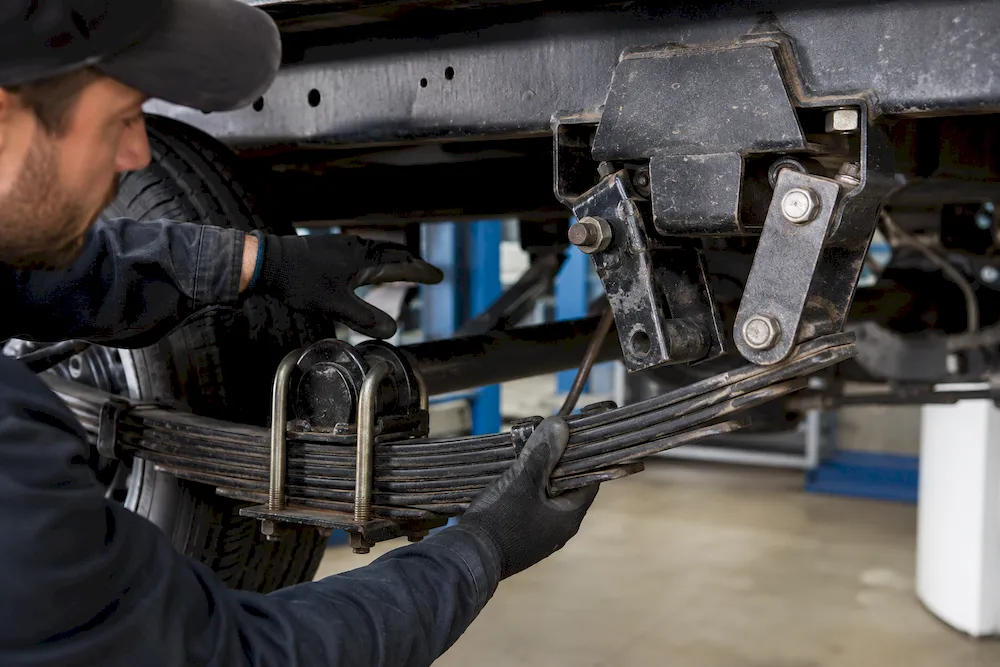
Many trailers use leaf spring suspension. Leaf springs help absorb road shock and support the trailer load. Other suspension parts include hangers, shackles, equalizers, U-bolts, and spring seats.
If springs are cracked, flat, rusty, or uneven, the trailer may sit low or tow poorly. Replacing suspension parts can improve stability and safety.
Important Measurements Before Buying Replacement Parts
Before ordering trailer axle parts, buyers should confirm the correct measurements. Buying by appearance only can lead to wrong parts.
Axle Capacity
Axle capacity tells you how much weight the axle is designed to support. Common ratings include 2,000 lb, 3,500 lb, 5,200 lb, 6,000 lb, 7,000 lb, and more.
Many parts must match the axle capacity. For example, a hub for a 3,500 lb axle may not fit a 7,000 lb axle.
Bolt Pattern
The bolt pattern is the arrangement of wheel studs on the hub. Common bolt patterns include 5 lug, 6 lug, and 8 lug designs. You need the correct bolt pattern so the wheel can fit properly.
Bearing Numbers
Bearings often have part numbers stamped on them. These numbers help identify the correct replacement bearing. If the number is not readable, you may need to measure the inside diameter and outside diameter.
Seal Size
The grease seal must match the hub and spindle. A wrong seal may leak grease or fail quickly. Always check the seal number or measure it carefully.
Hub Face and Spring Center
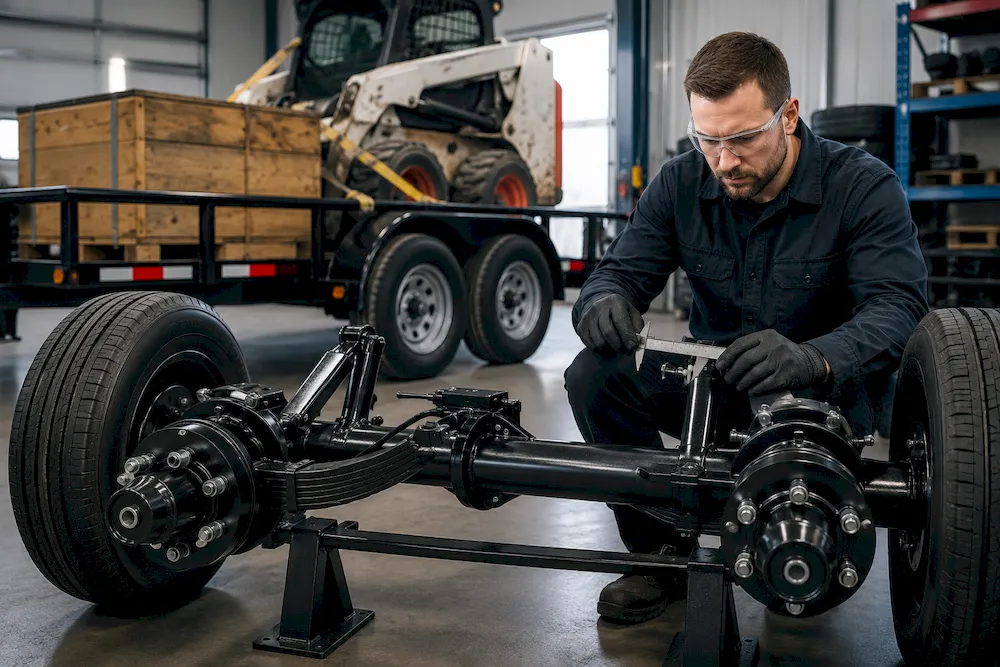
If you are replacing the full axle, two important measurements are hub face and spring center. Hub face is the distance from one wheel mounting surface to the other. Spring center is the distance between the spring seats.
These measurements help make sure the axle fits the trailer frame and suspension correctly.
Signs That Trailer Axle Parts Need Replacement
It is not always easy to see axle problems from outside. However, there are some warning signs buyers and trailer owners should watch for.
- Uneven tire wear
- Wheel vibration while towing
- Grinding or humming noise
- Hot hubs after driving
- Grease leaking around the hub
- Weak or uneven braking
- Loose wheel movement
- Trailer pulling to one side
- Visible cracks, rust, or bending
If you notice these signs, stop using the trailer until the problem is checked. A small problem can become dangerous if the trailer continues to run under load.
Should You Replace One Part or the Whole Axle?
This depends on the condition of the trailer axle. If only the bearing, seal, or brake part is worn, replacing the repair part may be enough. But if the axle beam is bent, the spindle is damaged, or many parts are badly worn, replacing the whole axle may be a better choice.
Replace Small Parts When:
- The axle beam is straight and strong.
- The spindle is smooth and not damaged.
- The hub is still in good condition.
- Only bearings, seals, brakes, or caps are worn.
Replace the Whole Axle When:
- The axle is bent or cracked.
- The spindle is damaged.
- The axle rating is too low for your load.
- Many parts need repair at the same time.
- You want to upgrade capacity or brake type.
Tips for Buying Trailer Axle Parts
To avoid wrong orders and delays, prepare important information before buying replacement parts.
- Check the axle capacity.
- Confirm the trailer type and load use.
- Measure the hub face and spring center if replacing the axle.
- Check bearing and seal numbers.
- Confirm wheel bolt pattern.
- Check brake size and brake type.
- Take photos of old parts if needed.
- Ask for support if you are not sure.
Final Thoughts
Trailer axle parts are key to safe towing and long trailer life. Before replacement, buyers should understand the basic parts, check the correct measurements, and choose parts that match the trailer load capacity.
Do not choose parts only by price or appearance. The right axle parts should match the axle rating, wheel bolt pattern, bearings, seals, brakes, and suspension system. When all parts fit correctly, the trailer can tow more smoothly and safely.
If you are unsure, collect the old part numbers, measurements, and trailer information before ordering. This can help you find the correct trailer axle parts and avoid costly mistakes.