Choosing the right trailer axle is very important for safety, performance, and long-term use. The axle supports the weight of the trailer and the cargo. If the axle is too weak, it may bend, wear out quickly, or even fail on the road. If the axle is too heavy for the trailer, it may cost more than needed and may not match other parts correctly.
For trailer owners, repair shops, and parts buyers, understanding load capacity is the first step. You do not need to be an engineer to make a better choice. You only need to understand a few basic points, such as trailer weight, cargo weight, axle rating, tire rating, brake type, and suspension style.
What Is Trailer Axle Load Capacity?
Trailer axle load capacity means the maximum weight the axle can safely support. This is often called the axle rating. Common trailer axle capacities include 2,000 lb, 3,500 lb, 5,200 lb, 6,000 lb, 7,000 lb, 8,000 lb, 10,000 lb, and higher.
For example, a 3,500 lb trailer axle is designed to support up to 3,500 pounds. If your trailer and cargo are heavier than this, the axle may be overloaded. Overloading can cause serious problems, including tire failure, bearing damage, brake problems, and unsafe towing.
Axle Capacity Is Not the Same as Trailer Capacity
Many buyers think that axle capacity is the only number they need. In fact, trailer capacity depends on several parts working together. The axle, tires, wheels, springs, hubs, frame, and brakes must all match the load requirement.
For example, even if you install a 7,000 lb axle, your trailer may not safely carry 7,000 lb if the tires or frame are rated lower. The weakest part often decides the real safe capacity.
Start with the Total Weight You Need to Carry
Before choosing an axle, you should know the total weight of your trailer and cargo. This is usually called the Gross Vehicle Weight Rating, or GVWR. It includes the empty trailer weight plus the maximum cargo weight.
A simple way to think about it is:
- Empty trailer weight
- Maximum cargo weight
- Tools, fuel, equipment, or extra accessories
- Safety margin for road use
For example, if your empty trailer weighs 1,200 lb and you plan to carry 2,000 lb of cargo, your total weight is 3,200 lb. In this case, a 3,500 lb axle may be suitable if all other parts also match. However, if you often carry close to the maximum weight, choosing a higher-rated axle may give better durability.
Single Axle or Tandem Axle?
The number of axles also affects load capacity. A small utility trailer may use one axle. A larger trailer may use two axles, also called tandem axles. Heavy-duty trailers may use three or more axles.
Single Axle Trailers
A single axle trailer is usually lighter, simpler, and easier to maintain. It is a good choice for small loads, light equipment, small boats, lawn care tools, and general home use.
Single axle trailers are often cheaper because they use fewer parts. However, they carry less weight and may feel less stable when loaded heavily.
Tandem Axle Trailers
A tandem axle trailer has two axles. This design spreads the weight across more tires and suspension parts. It is often used for heavier cargo, construction equipment, car haulers, enclosed trailers, and larger utility trailers.
Tandem axles usually provide better stability and safer towing for heavy loads. They also offer more support if one tire has a problem. However, they cost more and have more parts to maintain.
Check the Axle Rating
After you know the total weight, choose an axle rating that matches or exceeds your needs. Do not choose an axle that is too close to your maximum load if the trailer will be used often or on long trips.
Here are common axle ratings and typical uses:
- 2,000 lb axle: Small utility trailers, light-duty trailers, small cargo use.
- 3,500 lb axle: Utility trailers, small enclosed trailers, small boat trailers.
- 5,200 lb axle: Medium-duty trailers, equipment trailers, larger enclosed trailers.
- 6,000 lb axle: Heavy-duty utility trailers, car haulers, work trailers.
- 7,000 lb axle: Heavy equipment trailers, large enclosed trailers, commercial use.
- 8,000 lb and above: Heavy-duty commercial trailers and special applications.
These examples are general. Always check your trailer design, local rules, and part specifications before making the final decision.
Match the Axle with the Right Tires and Wheels
The tires and wheels must match the axle capacity. This is one of the most common mistakes buyers make. A strong axle cannot protect you if the tires are not strong enough.
Each tire has a load rating. When choosing trailer tires, add the load rating of all tires and make sure the total is enough for your trailer weight. For example, if you have two tires, both tires must support the full load together. If you have four tires on a tandem axle trailer, the load is shared across four tires.
Do Not Use Passenger Car Tires
Trailer tires are made for trailer use. They are designed to handle vertical load and towing stress. Passenger car tires are not the best choice for trailers. For safety and durability, use proper trailer tires with the correct load range.
Choose the Right Brake Type
Trailer brakes are important when the trailer is heavy. Small trailers may not always need brakes, depending on local regulations and trailer weight. Larger trailers usually need brakes for safe stopping.
Common trailer brake types include electric brakes and hydraulic brakes. Electric brakes are widely used on many utility trailers, car haulers, and enclosed trailers. Hydraulic brakes are often used in boat trailers and some heavy-duty applications.
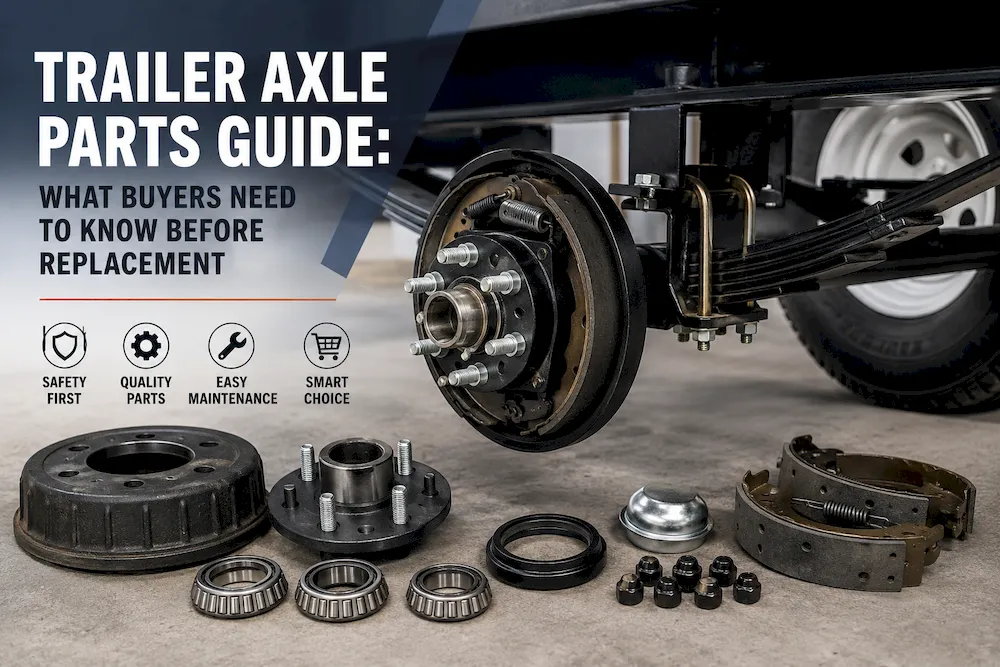
If your trailer will carry heavy loads, make sure the axle is compatible with the brake system you need. Also check the hub, drum, brake flange, and controller requirements.
Understand Hub Face and Spring Center Measurements
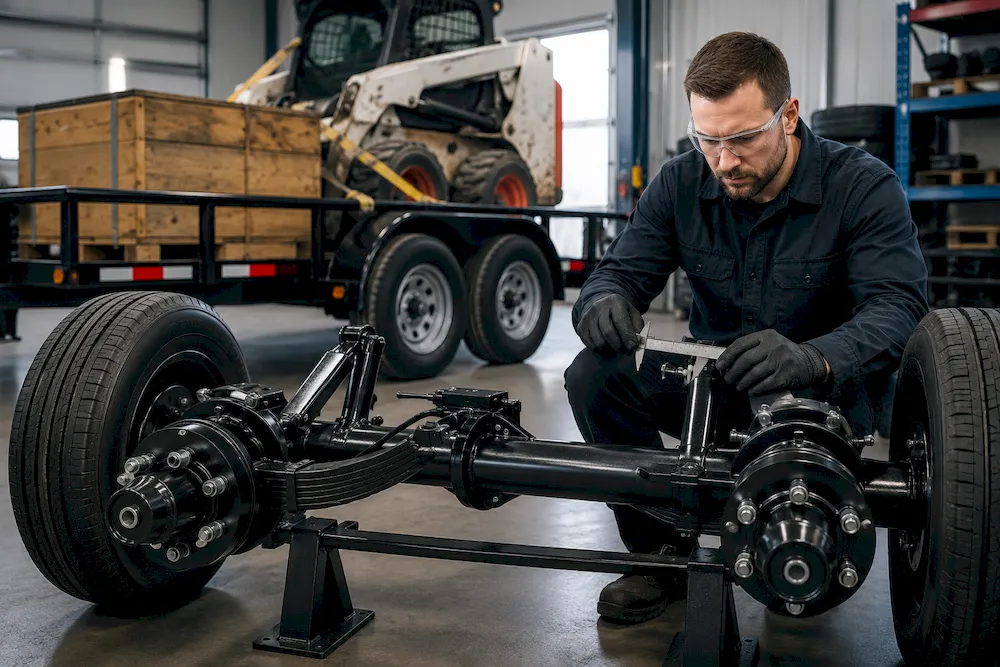
When replacing a trailer axle, capacity is not the only factor. You also need correct measurements. Two important measurements are hub face and spring center.
Hub Face Measurement
Hub face is the distance from one wheel mounting surface to the other. This measurement affects the wheel position and trailer width. If the hub face is wrong, the wheels may sit too far in or too far out.
Spring Center Measurement
Spring center is the distance between the centers of the spring seats. This measurement must match your trailer suspension. If it does not match, the axle may not fit correctly.
When buying a replacement axle, always measure carefully or check the original axle label if it is still readable.
Consider the Suspension Type
Trailer axles often work with leaf spring suspension or torsion suspension. Each type has its own benefits.
Leaf Spring Axles
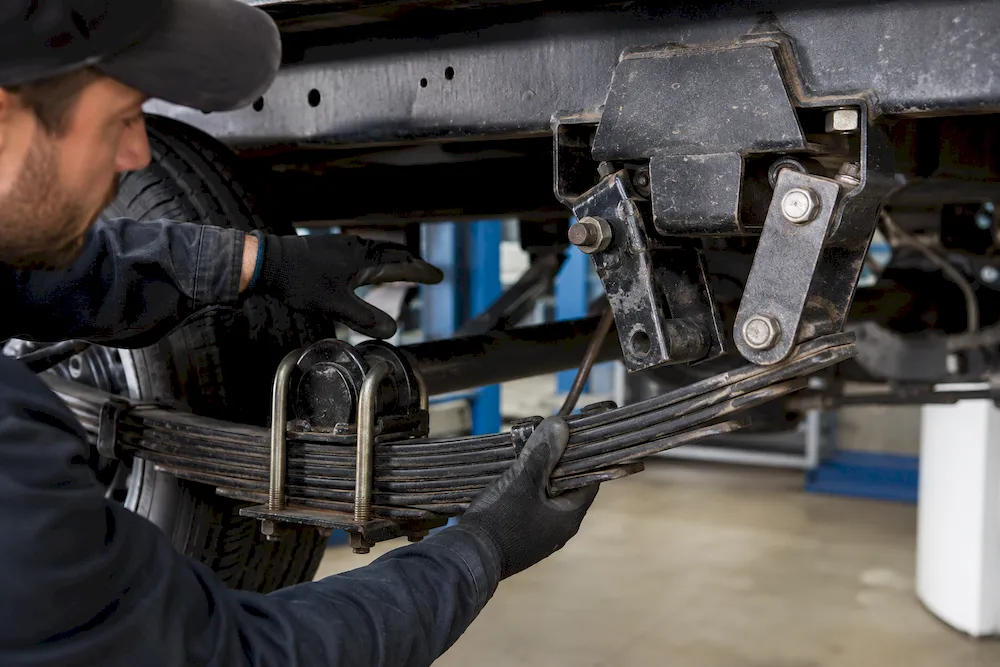
Leaf spring axles are common, strong, and easy to repair. Replacement parts are usually easy to find. They are a good choice for many utility trailers and work trailers.
Torsion Axles
Torsion axles provide a smoother ride and need less maintenance in some cases. They are often used for boat trailers, RV trailers, and enclosed trailers. However, they can be more expensive and may be harder to repair than leaf spring systems.
Leave a Safety Margin
It is usually a good idea to leave a safety margin. If your trailer often carries near the maximum weight, parts may wear faster. Roads are not always smooth. Sudden bumps, potholes, hard braking, and uneven loads can all add stress to the axle.
Choosing an axle with enough capacity can help improve long-term reliability. However, do not simply choose the biggest axle possible. The axle must still match the trailer frame, suspension, wheels, tires, and brakes.
Common Mistakes to Avoid
When choosing a trailer axle, avoid these common mistakes:
- Choosing an axle only by price.
- Ignoring the real weight of the cargo.
- Using tires with a lower load rating than the axle.
- Forgetting to check hub face and spring center measurements.
- Buying an axle without checking brake compatibility.
- Overloading the trailer because the axle “looks strong.”
- Not checking local towing and brake regulations.
Final Thoughts
Choosing the right trailer axle for your load capacity is about more than one number. You need to consider the total trailer weight, cargo weight, axle rating, tires, wheels, brakes, suspension, and measurements. A good axle should match your trailer and your real use.
If you are replacing an old axle, check the original specifications first. If you are building or upgrading a trailer, calculate your load needs carefully and choose parts that work together. The right trailer axle can make towing safer, smoother, and more reliable for the long term.
When in doubt, choose quality parts and ask for support before ordering. A correct axle choice can save time, reduce repair problems, and help keep your trailer ready for the road.