Trailer suspension parts are very important for safe towing. They help support the trailer weight, absorb road shock, and keep the trailer stable while driving. When suspension parts are in good condition, the trailer moves smoothly and follows the towing vehicle better. When these parts are worn or damaged, the trailer may shake, bounce, pull to one side, or become unsafe on the road.
Many trailer owners only check tires, lights, and brakes. But the suspension system also needs regular inspection. Small problems can become serious if they are not fixed early. This guide explains the common signs that your trailer suspension parts may need replacement.
What Are Trailer Suspension Parts?
Trailer suspension is the system that connects the trailer axle to the trailer frame. It helps carry the trailer load and reduce road vibration. The exact parts depend on the trailer type, but many trailers use leaf spring suspension.
Common trailer suspension parts include:
- Leaf springs
- Spring hangers
- Shackles
- Equalizers
- U-bolts
- Spring seats
- Bushings
- Bolts and nuts
- Torsion axle arms, if the trailer uses torsion suspension
These parts work together. If one part fails, it can put extra stress on other parts. That is why it is important to check the whole suspension system, not just one piece.
Why Trailer Suspension Parts Wear Out
Suspension parts work under heavy pressure. They carry the trailer and cargo weight every time the trailer is used. They also deal with road bumps, potholes, water, mud, salt, and vibration.
Over time, metal parts can bend, crack, rust, or become loose. Rubber or nylon bushings can wear down. Bolts can become loose. Springs can become flat or weak.
Common reasons for suspension wear include:
- Carrying too much weight
- Driving on rough roads
- Poor maintenance
- Rust and corrosion
- Old age
- Loose mounting hardware
- Uneven load distribution
Sign 1: Uneven Tire Wear
Uneven tire wear is one of the most common signs of suspension problems. If the suspension parts are worn or bent, the tires may not sit correctly on the road. This can cause one side of the tire to wear faster than the other.
What to Look For
Check your trailer tires regularly. Look for:
- One tire wearing faster than the others
- Wear on the inside or outside edge
- Flat spots on the tire
- Cupping or uneven tread pattern
Uneven tire wear can also be caused by axle alignment, tire pressure, or wheel bearing problems. But suspension parts should always be checked when tire wear looks unusual.
Sign 2: Trailer Bounces Too Much
A trailer will move a little when driving over bumps. But if it bounces too much, the suspension may not be working correctly. Weak or worn springs may not control the movement of the trailer well.
Too much bouncing can make towing uncomfortable and unsafe. It can also damage cargo, loosen bolts, and put extra stress on the axle and tires.
Possible Causes
- Weak leaf springs
- Broken spring leaves
- Worn bushings
- Loose suspension bolts
- Overloaded trailer
If the trailer continues to bounce after hitting a bump, it is time to inspect the suspension system.
Sign 3: Trailer Sits Low on One Side
If your trailer sits lower on one side, it may have a suspension problem. A weak or broken spring can cause one side of the trailer to drop. This can make the trailer unstable and cause uneven tire wear.
Sometimes the problem is caused by uneven cargo loading. Before replacing parts, remove the cargo or place it evenly and check again. If the trailer still sits unevenly, the suspension parts may need repair or replacement.
Parts to Check
- Leaf springs
- Spring hangers
- Shackles
- Equalizer, on tandem axle trailers
- U-bolts
Sign 4: Visible Cracks or Broken Springs
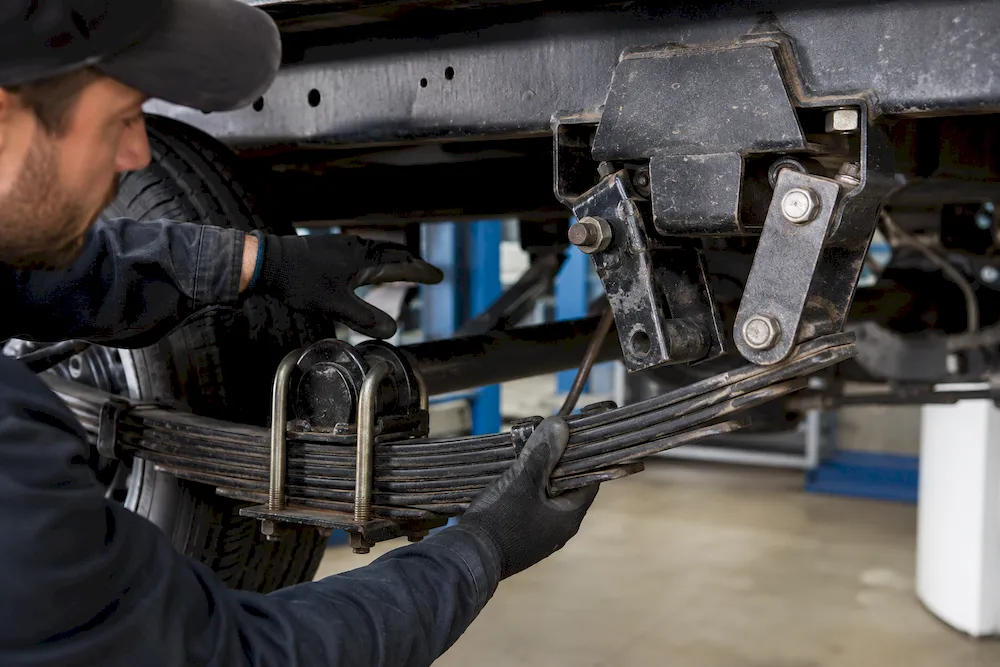
Leaf springs are made of layers of metal. These layers carry the trailer load and flex when the trailer moves. If one spring leaf cracks or breaks, the suspension becomes weaker.
A broken spring is a serious problem. The trailer should not be used until the spring is replaced. Driving with a broken spring can damage the axle, frame, tire, and other suspension parts.
How to Inspect Leaf Springs
Look closely at each spring. Check for:
- Cracks in the metal
- Broken spring leaves
- Flat or sagging springs
- Heavy rust
- Missing center bolts
If the spring looks damaged or weak, replacement is usually the safest choice.
Sign 5: Clunking or Squeaking Noises
Strange noises from the trailer suspension can be a warning sign. Clunking sounds may mean that bolts, shackles, or hangers are loose. Squeaking may come from worn bushings, dry parts, or metal rubbing against metal.
Do not ignore these sounds. Suspension parts should fit tightly and move correctly. Noise often means something is worn, loose, or not aligned properly.
Common Noise Sources
- Worn shackle bolts
- Loose U-bolts
- Damaged bushings
- Cracked spring hangers
- Dry or rusty moving parts
Sign 6: Loose or Rusted Hardware
Trailer suspension uses many bolts, nuts, and U-bolts. These parts hold the axle and springs in place. If the hardware becomes loose, the axle may move. This can make the trailer unstable.
Rust is also a common problem, especially on trailers used in wet areas, near the ocean, or on salted roads. Surface rust may not be serious, but deep rust can weaken the parts.
When Hardware Should Be Replaced
Replace suspension hardware if you see:
- Deep rust or corrosion
- Bent U-bolts
- Damaged threads
- Loose nuts that will not stay tight
- Cracked hangers or brackets
When replacing leaf springs or suspension parts, it is often a good idea to replace old hardware at the same time.
Sign 7: Trailer Pulls to One Side
If the trailer pulls to one side while towing, the suspension or axle alignment may be wrong. This can make towing difficult and unsafe. It may also cause fast tire wear.
A trailer can pull to one side because of tire pressure, brake problems, bent axle parts, or worn suspension parts. The full system should be checked before replacing parts.
Possible Suspension Problems
- Worn leaf springs
- Bent spring hanger
- Loose axle mounting
- Damaged equalizer
- Broken shackle
Sign 8: The Trailer Feels Unstable
A trailer with worn suspension may feel unstable at higher speeds. It may sway more than normal or feel hard to control. This can be dangerous, especially with heavy loads or long trips.
Trailer sway can have many causes, including poor weight distribution, tire issues, and speed. But suspension problems can make sway worse. If the trailer does not feel right, inspect the suspension before using it again.
Sign 9: Worn Bushings
Bushings are small parts, but they are important. They allow suspension parts to move smoothly and reduce metal-to-metal contact. When bushings wear out, the suspension can become noisy and loose.
Signs of Worn Bushings
- Loose movement in shackles
- Squeaking sounds
- Uneven suspension movement
- Visible wear or missing material
If bushings are worn, replacing them can help improve trailer stability and reduce noise.
How Often Should You Inspect Trailer Suspension?
You should inspect trailer suspension parts regularly. A quick check before each trip can help find obvious problems. A deeper inspection should be done after long trips, heavy hauling, or rough road use.
For trailers used often, it is a good idea to check suspension parts every few months. For commercial or heavy-duty trailers, inspection should be more frequent.
Simple Inspection Checklist
- Check if the trailer sits level.
- Look for broken or flat springs.
- Check for loose bolts and nuts.
- Look for deep rust or cracks.
- Check tires for uneven wear.
- Listen for noise during towing.
- Inspect hangers, shackles, and U-bolts.
Should You Replace One Part or the Whole Suspension Kit?
Sometimes only one part needs replacement. For example, if only a bushing or bolt is worn, you may not need a full kit. But if several parts are old, rusty, or loose, replacing a complete suspension kit may be better.
Replace One Part When:
- The rest of the suspension is still in good condition.
- The problem is small and easy to identify.
- The trailer is not heavily used.
Replace a Suspension Kit When:
- Several parts are worn at the same time.
- The trailer is used for heavy loads.
- You want better reliability.
- The old parts are rusty and hard to remove.
Final Thoughts
Trailer suspension parts play a major role in safe towing. If you notice uneven tire wear, too much bouncing, strange noises, loose hardware, broken springs, or poor trailer stability, it may be time to replace suspension parts.
Regular inspection can help you find problems early. Replacing worn parts before they fail can protect your trailer, cargo, tires, axle, and other components. It can also make towing safer and smoother.
When choosing replacement parts, make sure they match your trailer type, axle capacity, suspension design, and load needs. If you are not sure which parts are correct, check your trailer specifications or ask for support before ordering.